
Licensed Vocational Nurse to Registered Nurse (LVN to RN)
The LVN to RN (LVN to ADN) bridge lets a licensed vocational nurse build on existing nursing credit to earn an Associate Degree in Nursing and qualify for licensure as a Registered Nurse. You can pursue it through the Regular track or the Accelerated track. This page walks you through the entry requirements, how the application and selection process works for each track, what the program costs, and where and when the program meets. Review each section below, then reach out to the Nursing Office with any questions.
LVN to RN Resources
Category
Academic and Technical SupportAudience
- Future
Who can apply
- Hold a current, unencumbered California vocational nursing (LVN) license.
- Have 16 units of college-level vocational nursing credit, including Obstetrics and Pediatrics.
- Hold IV Therapy certification (verified through the BVNPT).
- Be 17 years or older with a 12th-grade education or equivalent.
- Complete the prerequisite courses with a "C" or better (no recency requirement): BIOL 20 (Human Anatomy), BIOL 21 (Human Physiology), BIOL 15 (Microbiology), ENGL 2 or 3, FN 2 (Basic Nutrition), PSY 1, and CMST 2/2H/4.
- Complete the NSG 64 and NSG 65 transition courses, which immediately precede program entry (these may still be in progress when you apply).
- Earn a cumulative prerequisite GPA of 2.5 (and a 2.5 across Anatomy, Physiology, and Microbiology), with no more than one repetition of those sciences.
- Take the TEAS exam and earn a composite of 62% or higher (by the first or second attempt).
Considerations
Co-requisite general education (Math, Humanities, and Ethnic Studies areas) must be complete before the program starts (waived if you already hold a bachelor's degree). All nursing programs require certain physical abilities and behaviors for successful completion. Graduates are eligible to take the NCLEX-RN examination to become licensed registered nurses.
Category
Academic and Technical SupportAudience
- Future
How to apply
- Complete the prerequisite courses before applying (NSG 64 and NSG 65 may still be in progress).
- Take the TEAS exam (composite 62% or higher).
- Complete a Butte College application if you are a new or returning student.
- Submit the LVN to RN Application to the Nursing Office. Forms are posted about three months before the deadline.
Apply to Butte College LVN to RN Application
How students are selected
Regular track — lottery
When there are more qualified applicants than seats, students are chosen by a computer lottery.
Accelerated track — 100-point rubric
The Accelerated track admits the top 48 applicants by the same 100-point rubric used for the Accelerated RN program (first-attempt TEAS, science GPA, healthcare work experience, and residency — each worth up to 25 points). See the Accelerated Track FAQ below for the full breakdown.
Reapplication
Applicants who are not selected may reapply, and the odds of admission increase with each consecutive reapplication. Applicants who decline a seat more than once may not reapply, and applicants who have failed more than once from any nursing program are not eligible to apply.
Deadlines
LVN-RN applications are available twice a year between December 1st and February 28th and again between May 1st and August 31st.
Category
Academic and Technical SupportAudience
- Future
Estimated cost
The estimated total program cost is approximately $6,800, including registration and fees, books, a medical skills kit, testing platforms (ATI and Kaplan), a laptop, health clearances (physical, immunizations, TB testing, background screening, and BLS/CPR), and the post-graduation NCLEX-RN exam and RN licensure fees. Costs are approximate and subject to change and do not include living expenses or transportation.
See the LVN to RN estimated program expenses sheet for the full breakdown.
Category
Academic and Technical SupportAudience
- Future
Where
The program is held on the Butte College main campus, 3536 Butte Campus Drive, Oroville, CA, with clinical rotations at partner sites in the area.
Time commitment
Your vocational nursing credit counts toward the first year of the two-year Associate Degree Nursing program. After completing the NSG 64 and NSG 65 transition courses, you continue into the registered nursing coursework.
Accelerated track
The Accelerated track is a faster, point-based option with nursing theory delivered online. Consider your readiness for an accelerated pace before applying.
Category
Academic and Technical SupportAudience
- Future
The 30-Unit Option (licensure without a degree)
California offers a 30-Unit Option that lets a licensed vocational nurse complete about 30 units to become eligible to take the RN licensure exam without earning an Associate Degree. This path is a certificate only — it does not award a degree and may not be recognized in other states. Discuss whether it fits your goals with a counselor or the Nursing Office.
Health Occupations Preparation Degree
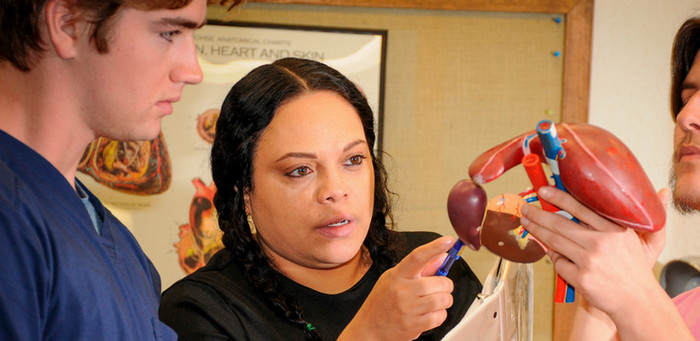
Many health occupation programs have prerequisite courses. We have designed the Health Occupations Preparation Degree ('HOP' degree for short) to include these prerequisites. Not all health occupations require full completion of the HOP degree but you will want to declare the HOP degree as your immediate goal if your ultimate goal is RN, LVN, Respiratory Therapy and other pathway goals outside of Butte College. Check the requirements for your ultimate goal to determine which courses in the HOP degree you should enroll in. The HOP degree can be completed at the Glenn Center in Orland or on Main Campus.
The HOP program is managed by the Biology Department.
Accelerated Track FAQ
Common questions about the one-year Accelerated Track Registered Nursing program.
You can apply from anywhere, but the 25 residency points are awarded only if your permanent address is in Butte, Glenn, Tehama, or Plumas County. Prove it with a state-issued ID or driver's license showing the address (no PO Box) plus one non-DMV document (lease or rental agreement, utility bill, cell phone bill, or tax return). Applicants outside these counties may still apply but receive no residency points.
You may apply for both the Regular and Accelerated tracks, but you must submit a separate application for each track you want to be considered for.
The schedule and teaching modality differ. The Accelerated Track is completed in one year, includes summer classes, and delivers all nursing theory online. The Regular Track runs two years with summers off and hybrid theory. Consider your readiness for an accelerated pace before applying.
No. The two tracks use different acceptance criteria: the Regular Track uses a lottery once minimum criteria are met, while the Accelerated Track uses a point-based system.
Yes — you may take the TEAS twice (in any distinct version) to reach the minimum 62% composite. However, only your first attempt in any distinct version is used to award selection points.
In the Accelerated Track, only your first attempt in each science course counts toward entrance. In the Regular Track, you may take one science course twice, and the higher grade is used.
All prerequisites and co-requisites must be complete before you begin (co-requisites may be in progress when you apply but must be finished before starting). Of 100 possible points:
- First-attempt TEAS composite: 25 pts (80+) · 15 pts (75–79.9) · 5 pts (70–74.9) · 0 pts (62–69.9)
- First-attempt GPA in Anatomy, Physiology & Microbiology: 25 pts (4.0) · 15 pts (3.5–3.99) · 5 pts (3.0–3.49) · 0 pts (2.5–2.99)
- Healthcare work experience in the last 2 years (LVN, CNA, EMT, Paramedic, Monitor Tech, Perinatal Tech, Surgery Tech, ED Tech, Patient Care Support Tech, or Corpsman; proven with an employer letter and license or certification): 25 pts (1,800+ hrs) · 15 pts (1,000–1,799) · 5 pts (500–999) · 0 pts (0–499)
- Permanent residence in Butte, Glenn, Tehama, or Plumas County: 25 pts
Have questions about Butte College Nursing?
Contact the Nursing Office. Program applications are available online and in the Nursing Office about three months before each deadline.