
Queer Resource Center
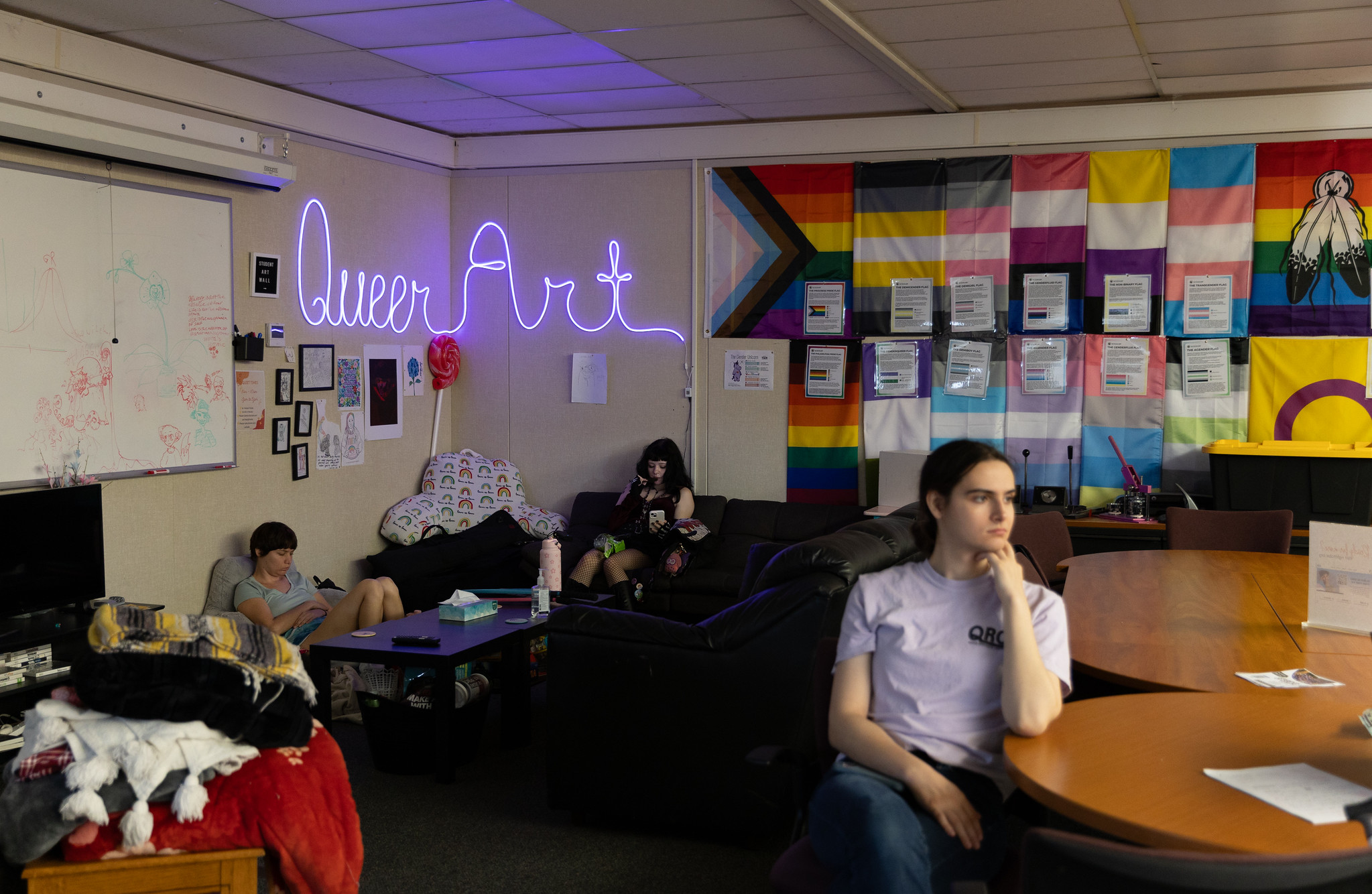
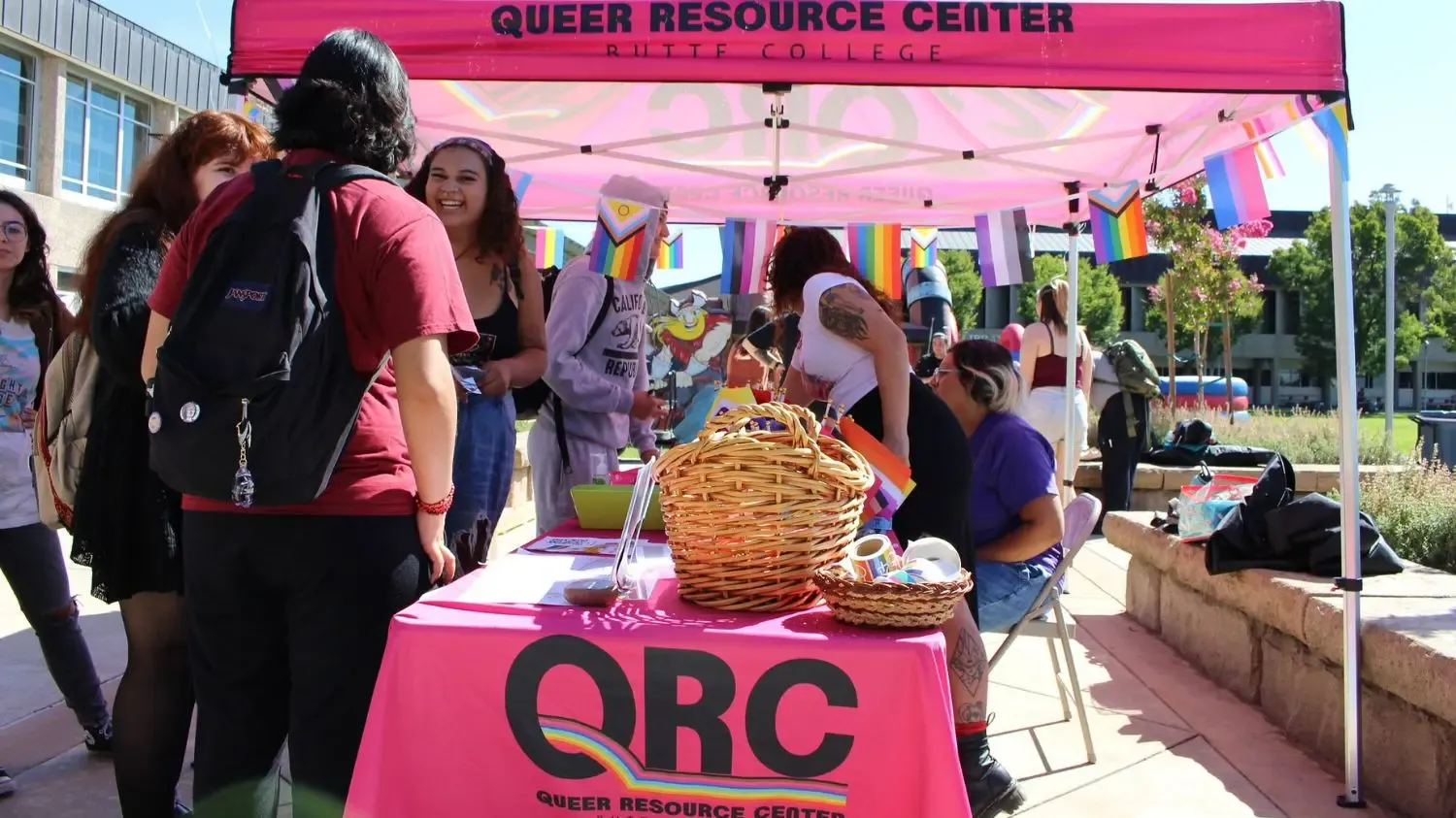
The Queer Resource Center offers a safe, inclusive space for LGBTQIA2S+ students with support services, advocacy, events, and education. The space is for students to meet others in the community and gain a support system while at Butte College. The QRC also provides educational workshops for those in the community as well as workshops to better help allies become better advocates for the LGBTQIA2S+ community. The QRC partners with the Gender and Sexuality Equity Team (GSET) to provide input on student needs and campus equity.
Founded in 2018 by student Skylar Darrow, the mission of the Queer Resource Center is to provide a safe, inclusive environment for LGBTQIA2S+ students and to provide basic needs and equitable access to help students meet their education goals. The Queer Resource Center was the eighth center out of the 114 California Community Colleges to open.
Services
Student Lounge
Students, faculty, and staff can relax in the student lounge and socialize with others over free snacks and games. The lounge also houses resources such as our lending library and clothing closet. Just remember, this is a safe and inclusive space for all. Those who challenge the safety of the space will be asked to leave.
Direct Support
The QRC provides Advocacy services for those experiencing harassment. Please see Students Rights under Title IX for more information about how you may be protected. Mental Health Counseling can be accessed via the Student Health Center. All services mentioned are free.
Supplies & Resources
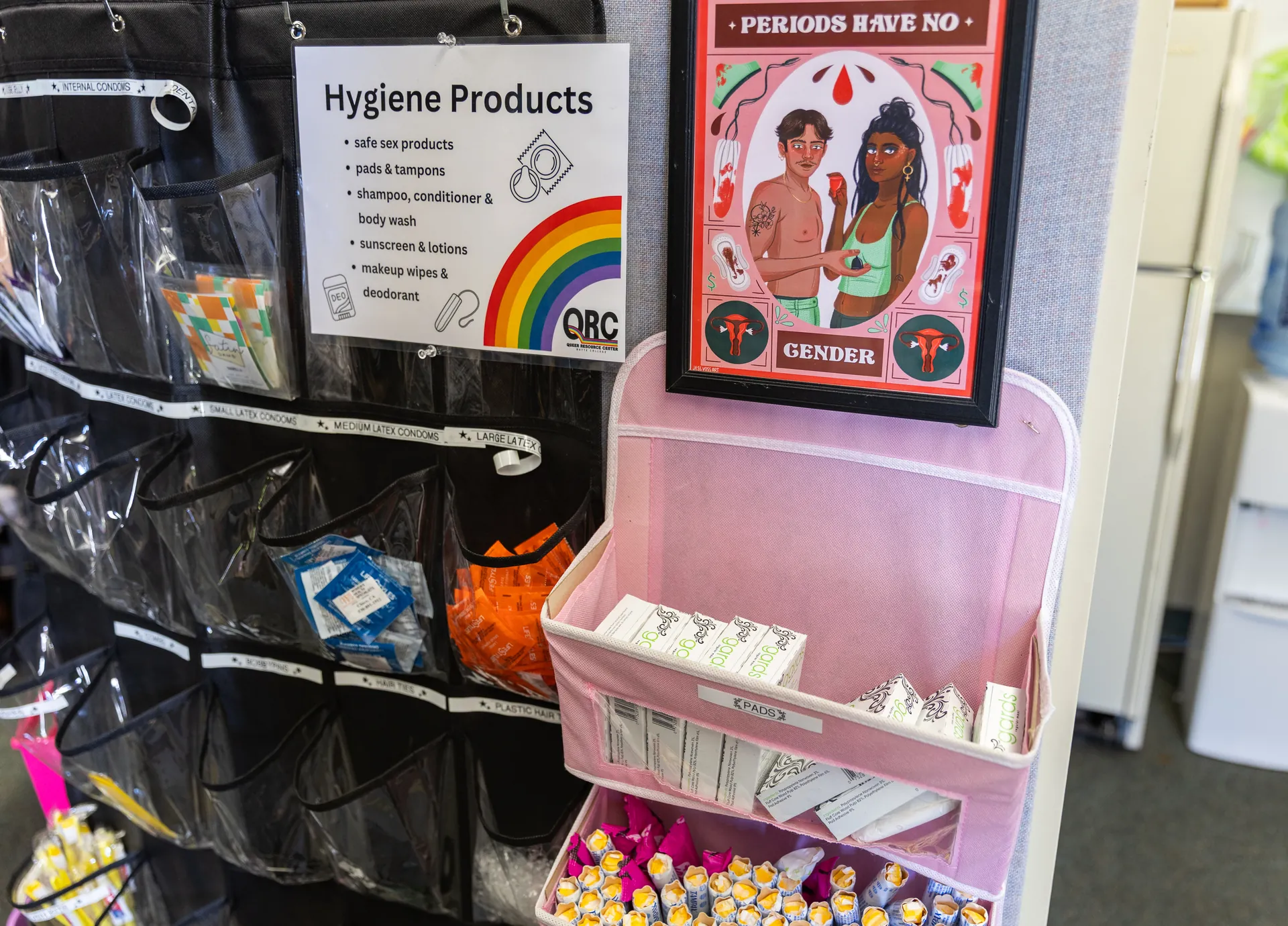
The QRC provides important resources such as free, inclusive hygiene products, sexual health products, and school supplies. Students can also check out queer literature from our Lending Library, or utilize our Clothing Closet for affirming clothing at no cost.
About the QRC
 Play Video
Hours and Location
3536 Butte Campus Drive
Oroville, CA 95965
Regular Hours
Monday - Thursday: 8:00 AM - 5:00 PM
Closed Friday
Summer Hours
Summer Hours Coming Soon!
Meet Our Staff
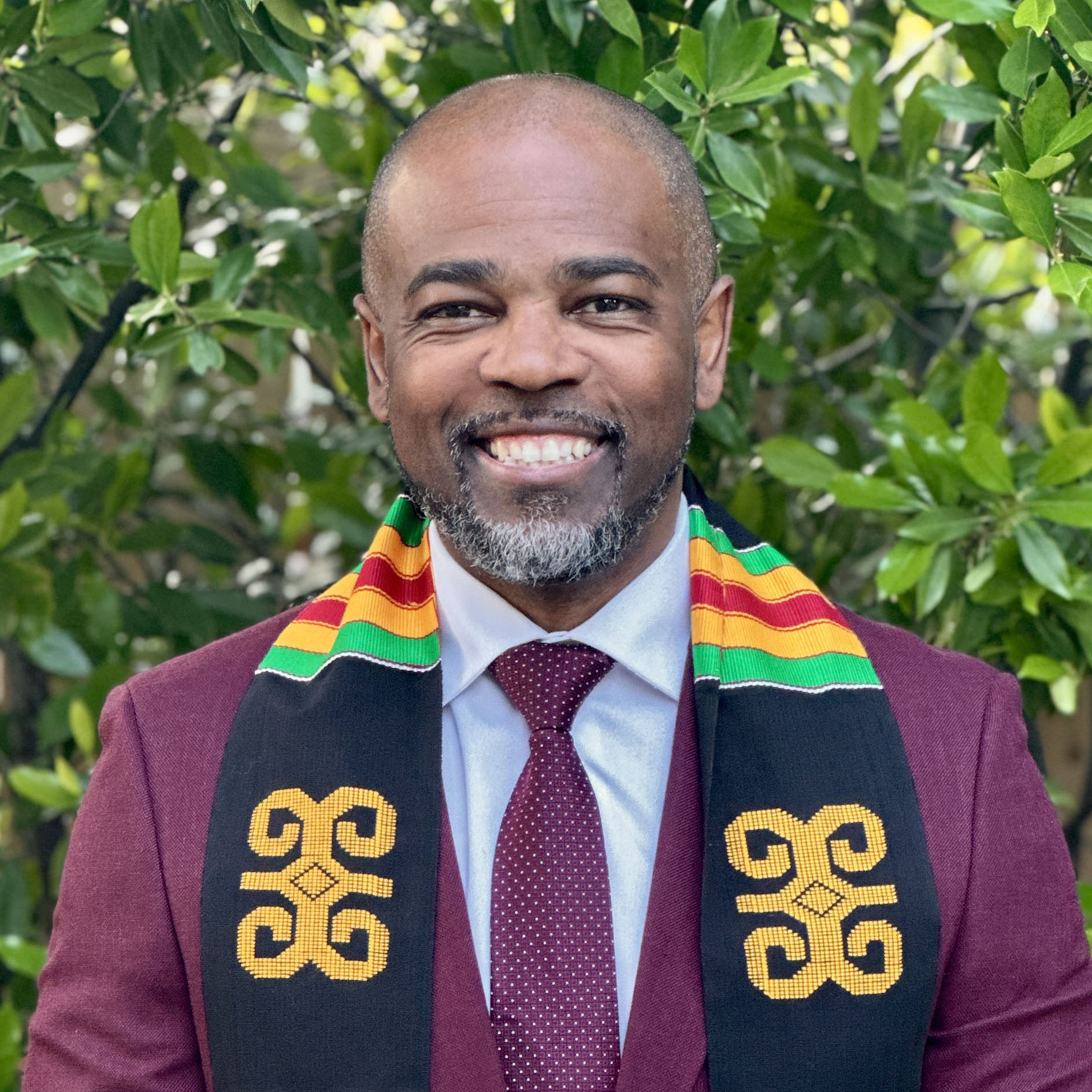
DIRECTORY NEEDS TO BE UPDATED

Frequently Asked Questions (FAQ)
LGBTQIA2S+ is an acronym that stands for lesbian, gay, bisexual, transgender, queer or questioning, intersex, asexual and Two-Spirit. The "+" represents other sexual identities that are not included in the acronym, such as pansexual and non-binary.
Queer is an umbrella term meant to encompass diverse sexual orientations and gender identities. On the left side of the umbrella's pole in the opposite diagram are L, G, and B standing for Lesbian, Gay, and Bisexual; these are sexual orientations. Sexual orientation describes sexual and emotional attraction to people of one's same sex/gender, opposite sex/gender, or multiple sex/gender identities. Sexual orientations include lesbian, gay, bisexual, heterosexual, pansexual, and asexual.
On the right side of the umbrella's pole is T which stands for Transgender. Like 'queer,' Transgender is an umbrella term under which various gender diverse identities fall; Trans* with the asterisk is often used to denote the diversity among people who identify as trans. A trans* person is someone whose psychological self ("gender identity") differs from the social expectations for the physical sex they were born with.
If there is a special request, please email the qrc@butte.edu, or if you have expertise in a particular area or identity and would like a chance to share your knowledge, please let us know!
Strategies for Faculty
- Include your personal gender pronouns in your email signature
- Become familiar with Butte College's Chosen Name Project and how Preferred Name will appear on both class and grade rosters
- Provide space for students to disclose personal gender pronouns at the start of each course
- Include LGBTQ histories and issues into your curriculum
- Don’t place the burden of representation on students
- Locate the nearest gender-inclusive restrooms to your office or classroom so you will be able to give directions to students in need
- Be cognizant of power structures and power dynamics
- Attend continuing education oppurtunitites including SafeZone I & II training & display training certificates
- Know campus resources to be able to refer students to the appropriate support services
Strategies for Staff & Student Assistants
- Include your personal gender pronouns in your email signature
- Know campus resources to be able to refer students to the appropriate support services
- Mirror language used by the student
- Don’t assume resource needs
- Locate the nearest gender-inclusive restrooms to your office or classroom so you will be able to give directions to students in need
Continuing Education Resources
Pronouns: A Resource for Educators
Using Gender-Inclusive Language in Advanced Life Science Courses
If there is a special request, please email the qrc@butte.edu, or if you have expertise in a particular area or identity and would like a chance to share your knowledge, please let us know!
CALIFORNIA LAWS THAT PROTECT STUDENTS AT SCHOOLS
Title IX is a federal law banning sex discrimination in schools. Courts have made it clear that that includes discrimination against someone because they are transgender or don’t meet gender stereotypes or expectations. Title IX applies to all schools (including both K–12 schools and colleges) that get federal money, including nearly all public schools.
AB 1266: also known as the “School Success and Opportunity Act,” requires that pupils be permitted to participate in sex-segregated school programs, activities, and use facilities consistent with their gender identity, without respect to the gender listed in a pupil’s records.
Education Code Section 200: It is the policy of the State of California to afford all persons in public schools, regardless of their disability, gender, gender identity, gender expression, nationality, race or ethnicity, religion, sexual orientation, or any other characteristic that is contained in the definition of hate crimes set forth in Section 422.55 of the Penal Code, equal rights and opportunities in the educational institutions of the state.
AB 9 Seth’s Law (2012): requires public schools to update their anti-bullying policies and programs and it focuses on protecting students who are bullied based on their actual or perceived sexual orientation and gender identity/gender expression, as well as race, ethnicity, nationality, gender, disability, and religion.
Requires schools to...
-
-
To adopt specific processes for receiving and investigating complaints of bullying
-
To take immediate steps to intervene if school personnel witness bullying, harassment, intimidation, or discrimination
-
Publicize the anti-bullying policy and complaint process
-
Post on the district website materials to support victims of bullying
-
The Equal Access Act requires all student organizations, such as a Gay-Straight Alliance or Pride Alliance in federally funded schools, to be treated equally. This means that public schools, or any which receive federal funding, cannot ban certain types of groups or single them out.
Family Educational Rights and Privacy Act (FERPA) protects personal information about students in school records, and in most cases it makes it illegal for schools to share that information with others without permission from a student or (if the student is a minor) their parents. This includes information about their transgender status or medical history.
First Amendment of the U.S. Constitution protects students’ freedom speech and freedom of expression. That includes the right to dress according to your gender identity, talk about being transgender openly, and express your gender in other ways.
California Family Code § 6925: Minors may receive medical care related to the prevention or treatment of pregnancy, may consent to an abortion and receive birth control without parental consent. Read the full chart of minor medical consent laws here.
Rights for LGBTQIA2S+ Athletes
Trans Athletes must petition to play sports in their identified gender
- Intention/ Status of transition - Detailed written narrative by physician documenting the student’s transition status
- Treatment/Therapy type - including hormone regimen and dosage, related surgery, psychological treatment/therapy, and any other medical documentation related to transition. (1 year HRT minimum)
- Timeline - all treatments related to transition including exact date when hormone therapy began
- Testosterone - Timeline documentation and measures of student’s levels if relevant to transition plan
- Original Birth Certificate
- Written acknowledgements confirming awareness of this student-athlete’s request for this process by:
- College President
- Title IX Officer
- Senior Athletic Administrator
- College Athletic Training Staff/ Team Doctor
"Everything You Ever Wanted to Know About Title IX"
A publication of the California Community College Athletic Association Gender Equity Committee.
The mission of the Safe Zone training program is to challenge homophobia, transmisogyny, cis-and heterosexism on the college campus and community by encouraging welcoming and inclusive environments for Lesbian, Gay, Bisexual, Transgender, Intersex, Queer or Questioning, and Asexual (LGBTQIA+) students, faculty, staff, and community members. The Safe Zone program is a 3 hour introductory training that invites participants to learn about LGBTQIA+ issues, provide resources, and create a supportive environment for LGBTQIA+ students, faculty, and staff exploring issues of sexual identity, gender identity, and gender expression.
Upcoming Trainings
To be announced (TBA).
For more questions or information, please email: qrc@butte.edu or springerhe@butte.edu